❌

Vista elenco

F1 | Test Pirelli: Mercedes completa oltre 600 km con Vesti a Magny-Cours alla ricerca del punto di crossover

15 Ottobre 2026 ore 19:00
Si è conclusa con ancora Frederik Vesti al volante la seconda giornata di test organizzata da Pirelli sul circuito di Magny-Cours. Il terzo pilota Mercedes ha completato oggi 138 giri per un totale di 609 chilometri.
Vesti ha testato diverse soluzioni di pneumatici da asciutto, con mescole di differente durezza, che hanno consentito, fra le varie valutazioni effettuate, di individuare il punto ...Continua a leggere

F1 | Williams salta una numerazione nel telaio per festeggiare con la FW50 il mezzo secolo di storia

15 Ottobre 2026 ore 18:41
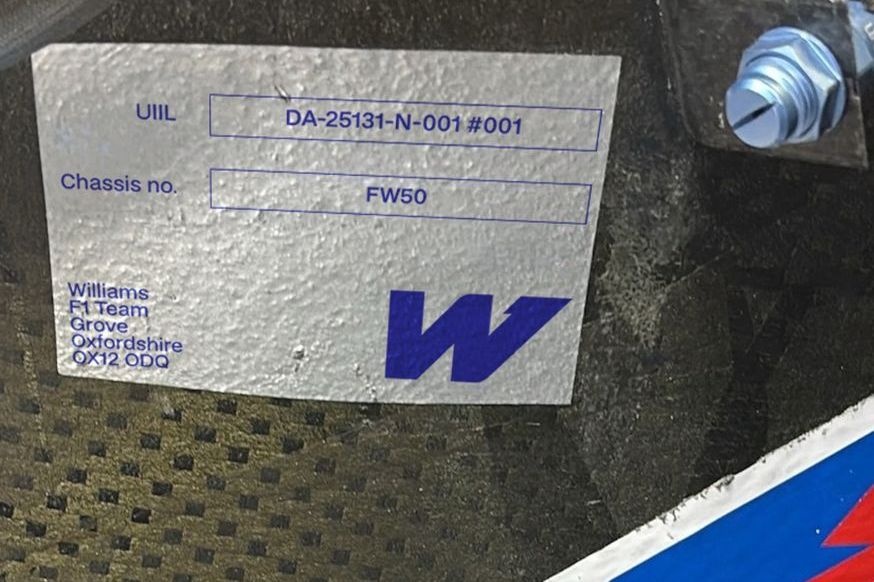
La Williams dà un segno di vita e con una sola immagine ci regala due informazioni: la prossima monoposto salterà una cifra nella tradizionale denominazione delle sue macchine visto che la squadra di Grove compirà nel 2027 il mezzo secolo e si passerà dalla deludente FW48 di questa stagione alla FW50. 

Carlos Sainz, Williams
Foto di: Andy Hone/ LAT Images via Getty ...Continua a leggere

Christian Horner ammette che la rivalità in F1 con Toto Wolff è diventata "teatro"

15 Ottobre 2026 ore 18:19
Christian Horner ha ammesso che la sua lunga rivalità con il suo omologo in Formula 1, Toto Wolff, è diventata «più simile a uno spettacolo teatrale», pur assicurando che fosse comunque "autentica".
Tutti i titoli mondiali di Formula 1 conquistati tra il 2010 e il 2023 sono andati alla Mercedes di Wolff o alla Red Bull di Horner, circostanza che ha inevitabilmente alimentato gli scontri ...Continua a leggere

F1 | Haas, Komatsu rivela: "Senza il test di Portimao forse non avremmo scelto Camara"

15 Ottobre 2026 ore 17:57
Il futuro di Rafael Camara in Formula 1 si è deciso nell'arco di due giornate sul circuito di Portimao. È questo il retroscena più significativo emerso dalle parole di Ayao Komatsu, team principal della Haas, in un incontro con i media tenutosi subito dopo l'annuncio dell'ingaggio del ventunenne brasiliano per la stagione 2027. Un test che non si è limitato a confermare le qualità di un ...Continua a leggere

F1 | Qatar e Abu Dhabi non si fermano nonostante i missili in Arabia Saudita, ma Imola è all'erta

15 Ottobre 2026 ore 17:31
Primo: i GP del Qatar e di Abu Dhabi sono confermati. Secondo: Imola prosegue l’allestimento dell’Enzo e Dino Ferrari affinché, eventualmente, possa essere pronto ad accogliere l’ultimo appuntamento del mondiale di F1. 
Eppure, dopo le rassicurazioni che erano state date a Sepang da Stefano Domenicali in occasione del GP del Bahrain disputato in Malesia che gli ultimi due GP del Golfo ...Continua a leggere

Ufficiale: Rafael Câmara debutta in F1 nel 2027 con la Haas

15 Ottobre 2026 ore 16:02
Rafael Câmara sarà un pilota della Haas a partire dalla stagione 2027. La squadra americana ha ufficializzato l'ingaggio del ventunenne brasiliano, che ha firmato un contratto pluriennale e farà il suo debutto nel mondiale di Formula 1 il prossimo anno. Una promozione che arriva al termine di un percorso nelle categorie propedeutiche caratterizzato da una crescita costante, culminata con la ...Continua a leggere

Rugby Serie A1: domenica alle 15:30 il Livorno Rugby ospiterà l’Amatori Alghero

15 Ottobre 2026 ore 14:43

Il campionato di Serie A, girone 1 (ribattezzato semplicemente ‘A1’), è composto da 12 e non più da 10 squadre. Aumentano dunque, da 18 a 22 le partite da sostenere per ciascuna formazione. Al termine della regular season, le prime tre accederanno ai playoff promozione (la vincente di tali spareggi che coinvolgeranno anche la miglior realtà della serie A2 festeggerà il salto in A élite), mentre le ultime due scenderanno in A2. La sensazioneè che tante partite saranno all’insegna dell’equilibrio: anche le compagini più attrezzate dovranno sudare non poco per ottenere buoni risultati al cospetto di squadre considerate di seconda fascia. Si preannunica un bel torneo, livellato verso l’alto, con poche gare dal pronostico chiuso.

UN PASSO ALLA VOLTA. Il Livorno Rugby, con la sua fortissima identità labronica, con la sua rosa tutta italiana e compostain modo pressoché esclusivo da giocatori nati e cresciuti nel proprio floridissimo vivaio, è intenzionato ad esprimersi al massimo in ogni singolo incontro, senza effettuare calcoli. Si riparte dal settimo postocolto nell’ultimo campionato. La supervisione di tutte le rappresentative biancoverdi è affidata, per la terza annata di fila, al direttore tecnico Gianluca Guidi, con la conduzione della prima squadra passata nelle mani dei giocatori-allenatori Rocco Del Bono e Antonio Tangredi (che nella stagione scorsa avevano ricoperto le mansioni di vice-allenatori).

FILOSOFIE DIFFERENTI. Questa domenica, alle 15.30, nel quadro della prima giornata della serie A1, il Livorno Rugby riceverà la visita degli Amatori Alghero, la squadra che dopo il quinto posto (a quota 40) nel proprio girone territoriale (quello del nord-ovest) di serie A2 è stata ripescata in A1 nel corso dell’estate. Èquella sarda l’unica compagine di tutta la serie A penalizzata (4 punti), per non aver nella scorsa stagione disputato con la propria rappresentativa under 14 il numero di gare obbligatorie. La realtà isolana è inserita – è evidente -, anche a livello geografico, in un contesto differente rispetto a quello dei livornesi e più in generale differente rispetto ai sodalizi che operano sul continente. Per farla breve: l’Alghero punta quasi tutte le proprie risorse sulla prima squadra, a caccia di giocatori già formati e comunque provenienti da fuori. Una squadra di spessore, almeno a giudicare dai nomi dei componenti della rosa. Differente il progetto del Livorno Rugby, che costruisce i propri giocatori da quando, giovanissimi, nel mini-rugby, muovono i loro primi passi nel mondo della palla ovale.

TIFO PREZIOSO. La Festa Biancoverde – la serata vissuta lo scorso 3 ottobre, nel corso della quale si è svolta anche la presentazione ufficiale della prima squadra – ha pienamente confermato la vitalità di tutto l’ambiente. È auspicabile che tale entusiasmo sia evidenziato anche questa domenica, con supporters caldi ed appassionati aspingere i propri beniamini. Questa formazione, composta da ‘Gente di mare’, da ‘livornesi di scoglio’ e comunque da atleti che vivono la loromaglia come una seconda pelle, merita le simpatie degli sportivi labronici. Sul ‘Montano’, anche grazie all’apporto degli appassionati, ibiancoverdi, nella scorsa stagione, hanno costruito le loro imprese piùbelle. Per ottenere, contro il temibile Alghero, un buon risultato, serviranno tutte le componenti. Pure gli sportivi – più che mai visto e considerato che il Livorno Calcio non giocherà in contemporanea – devonofare la loro parte. Start fissato alle 15:30. Designato l’arbitro Pietro Menga di Bari.

GLI INNESTI. In prima squadra, tra i nuovi, figuranoil pilone-tallonatore figlio d’arte Amedeo Aiello, il terza linea Gregorio Alagna, il terza linea Pietro Calvi, il mediano di apertura fratello d’arte Romeo Celi, il seconda linea Leon Grammatica, il medianodi apertura/estremo figlio e nipote d’arte Cristian Isozio, il mediano di mischia figlio e fratello d’arte Giulio Lenzi ed il centro/ala Alessandro Mesaglio. Tutti giocatori perfettamente integrati con il ‘nucleo storico’. Tutti giocatori – a parte Alagna che è un classe ‘99 –giovanissimi, destinati a rivestire un ruolo prezioso in questa stagione così impegnativa, in un torneo nel quale tutte le 22 partite saranno dure. La sensazione è che spesso e volentieri assisteremo ad incontri decisi sul filo di lana, con i dettagli a far la differenza. Inserie A1 nessuna squadra è in grado di dominare gli incontri dal drop d’inizio al triplice fischio finale. Le forti emozioni sono garantite.

F1 | Audi e Öhlins: la partnership sugli ammortizzatori di inizio stagione entra nella fase calda

15 Ottobre 2026 ore 13:03
Si intensifica la collaborazione di Audi con Öhlins: è stata ufficializzata mercoledì 15 ottobre la partnership della Casa dei quattro anelli con il leader globale nelle soluzioni di sospensione ad alte prestazioni e parte del Gruppo Brembo dal 2025.
Il rapporto, in realtà, è iniziato già all’inizio della stagione 2026, ma ora parte un’importante partnership su un programma congiunto ...Continua a leggere

Racing Spirit lancia la collezione ufficiale James Hunt 1976

15 Ottobre 2026 ore 11:59
 Racing Spirit, il brand di abbigliamento tecnico premium di Racing Force Group, è orgoglioso di annunciare il lancio della collezione ufficiale James Hunt 1976 che celebra il 50° anniversario della sua vittoria nel Campionato del Mondo di Formula 1, in collaborazione con Global Trademark Licensing e James Hunt Estate.
Sviluppata nell’ambito di un accordo di licenza pluriennale, la ...Continua a leggere

F1 | Christian Horner voleva Fernando Alonso e Charles Leclerc alla Red Bull

15 Ottobre 2026 ore 11:03
Il sedile in Red Bull per il 2025 sarebbe potuto andare a Fernando Alonso o a Charles Leclerc e, secondo Christian Horner, avrebbe voluto entrambi allo stesso modo.
Nel suo prossimo libro, Drive, Horner racconta come l’ex team principal si sia trovato con le spalle al muro nel tentativo di trovare un nuovo pilota da affiancare a Max Verstappen. Horner, che ha guidato la Red Bull per due ...Continua a leggere

Ecco come una conversazione con Prost ha aiutato Toto Wolff a gestire un team di vertice in F1

15 Ottobre 2026 ore 09:59
Mercedes si sta avviando a vincere altri due titoli iridati dopo quelli dell'epopea durata dal 2014 al 2021 grazie ad Andrea Kimi Antonelli - in testa alla classifica Piloti - e anche all'apporto di George Russell per ciò che riguarda quella Costruttori.
Per gran parte del 2026 la W17 è stata la monoposto di riferimento e, non a caso, Antonelli e Russell occupano i primi due posti della ...Continua a leggere

F1 | Perché Horner ha vietato il nome Mercedes mentre Red Bull costruiva il proprio motore

14 Ottobre 2026 ore 20:00
L'ex CEO e team principal della Red Bull, Christian Horner, ha rivelato perché vietò ai dipendenti della divisione powertrains della squadra di usare il nome degli acerrimi rivali, ovvero la Mercedes.
La scuderia con sede a Milton Keynes aveva vissuto una partnership fiorente con Honda dopo la turbolenta fine del periodo con le power unit Renault, tornando ad essere una contendente al titolo ...Continua a leggere

F1 | Test Pirelli: Mercedes completa 125 giri a Magny-Cours con le intermedie per il 2027

14 Ottobre 2026 ore 19:06
Ha contribuito anche la pioggia reale a completare la giornata di test organizzata da Pirelli a Magny-Cours per lo sviluppo dei pneumatici da bagnato della prossima stagione.
Frederik Vesti, terzo pilota Mercedes, ha provato oggi diverse soluzioni di pneumatici Intermedi, caratterizzate da differenti mescole e strutture, con l’obiettivo di individuare i prototipi in grado di garantire le ...Continua a leggere

F1 | Red Bull sceglie la continuità vincente: Laurent Mekies ha rinnovato fino al 2031

14 Ottobre 2026 ore 18:41
Quando i risultati arrivano, scegliere la continuità è solo una conseguenza. Ed è ciò che è avvenuto oggi tra Red Bull Racing e Laurent Mekies. Il team di Milton Keynes e il manager francese hanno raggiunto e firmato l'accordo che li legherà per i prossimi 5 anni.
L'ex boss della Racing Bulls - che ha avuto anche ruoli importanti in Ferrari, Minardi, Toro Rosso e FIA - occupa il ruolo i ...Continua a leggere

F1 | Horner si apre sull’addio alla Red Bull: "Forse si riteneva che avessi troppa influenza sulla squadra"

14 Ottobre 2026 ore 16:01
Christian Horner ha lasciato intendere che a portare alla sua uscita dal ruolo di team principal della Red Bull in Formula 1 lo scorso anno sia stato il fatto che "si riteneva che avessi troppa influenza sulla squadra".
L’ex grande capo della Red Bull ha supervisionato la trasformazione della squadra targata energy drink e l'ha guidata in due ere di dominio in F1: prima con Sebastian Vettel ...Continua a leggere

F1 | Ferrari, a Singapore Hamilton ha scelto da solo: eccessiva ambizione o mancanza di fiducia?

14 Ottobre 2026 ore 15:12
Ci sono momenti in cui un pilota deve fidarsi del proprio istinto, assumendosi il rischio di prendere una decisione diversa da quella suggerita dal muretto. È una delle qualità che distinguono i grandi campioni, abituati a leggere le corse attraverso sensazioni che non sempre possono essere tradotte in numeri o simulazioni. Ma esiste anche il rovescio della medaglia: la stessa convinzione che ...Continua a leggere

KDE Plasma 6.8 è disponibile: tante novità e addio definitivo alla sessione X11

14 Ottobre 2026 ore 15:02

KDE Plasma 6.8 è disponibile con Wayland al posto della sessione X11, miglioramenti alle prestazioni, HDR, desktop remoto e nuove funzioni

L'articolo KDE Plasma 6.8 è disponibile: tante novità e addio definitivo alla sessione X11 proviene da Marco's Box.

Su Westerlund 1 il bozzo d’uno scontro galattico

14 Ottobre 2026 ore 11:47

Gli ammassi stellari sono sistemi dinamici estremamente complessi e affascinanti. Cosa li rende così complicati? Innanzitutto, l’evoluzione sia dinamica sia fisica delle loro stelle. Stelle di massa diversa hanno tempi di vita differenti: quelle più massicce possono terminare la propria evoluzione esplodendo come supernove, mentre quelle di piccola massa stanno ancora evolvendo verso la “maturità” della sequenza principale. Inoltre, le stelle si muovono rapidamente all’interno dell’ammasso scambiando energia, precipitando verso il centro o “evaporando” man mano che si allontanano. A complicare il quadro interviene l’interazione tra gli ammassi e il loro ambiente circostante: altri ammassi stellari, nebulose e l’intera Via Lattea con il suo potenziale gravitazionale.

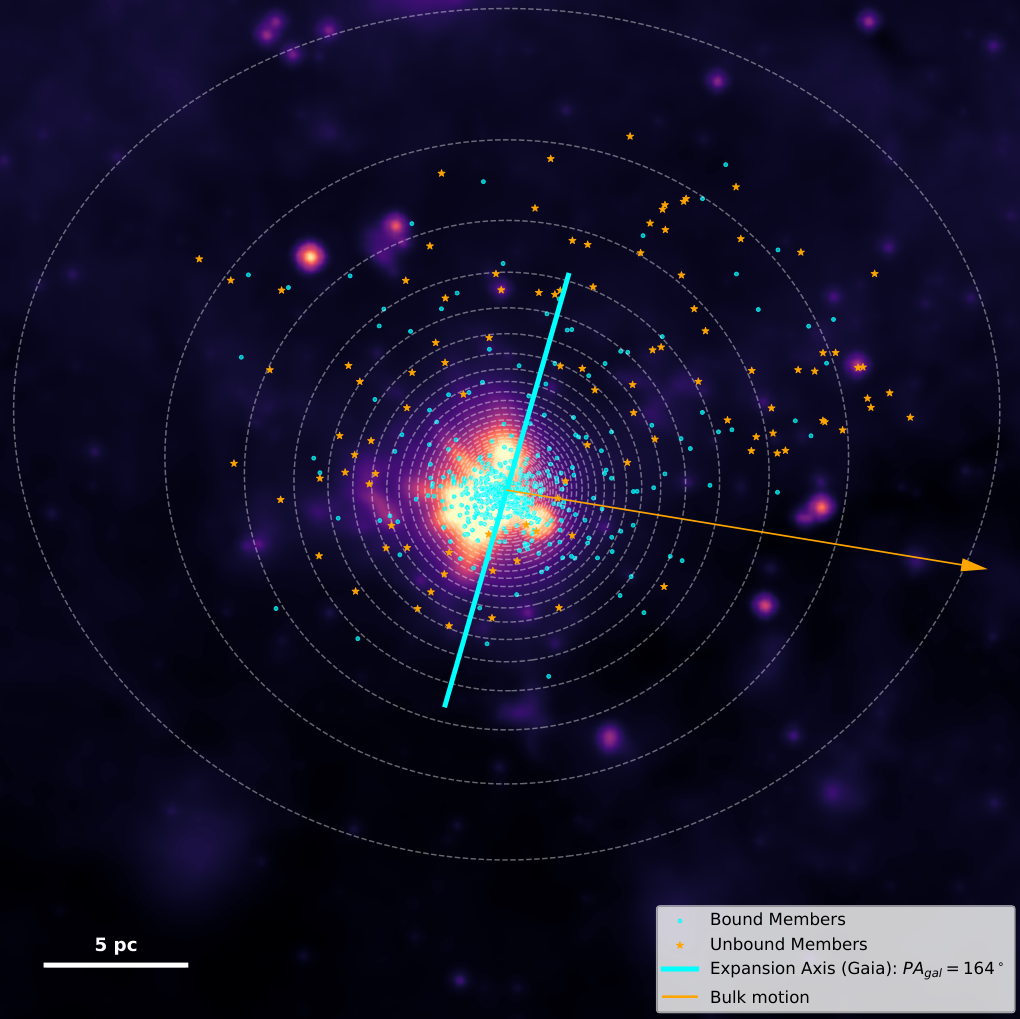
Distribuzione delle stelle di Westerlund 1 analizzate nello studio in uscita su A&A. Nel grafico si distinguono quelle ancora legate all’ammasso e quelle non legate, nonché la direzione di espansione e del moto di Westerlund 1, su un’immagine in medio infrarosso ottenuta dal satellite Wise. Le linee mostrano la configurazione del potenziale gravitazionale della Via Lattea. Crediti: L. Prisinzano et al., A&A, 2026

Tutto questo lascia impronte indelebili nella configurazione spaziale e dinamica che osserviamo oggi negli ammassi. Impronte che in questi anni siamo in grado di analizzare con grande precisione grazie al satellite Gaia dell’Agenzia spaziale europea. Il catalogo di osservazioni di Gaia contiene infatti informazioni accurate sulla posizione e sulla dinamica delle stelle, integrate da dati spettroscopici che permettono di risalire alla natura delle stelle. Analizzati con cura, i dati di Gaia permettono di ottenere un quadro completo della struttura e della dinamica degli ammassi e delle singole stelle che li compongono.

Un team di ricercatori guidato dall’astrofisica Loredana Prisinzano dell’Inaf di Palermo ha analizzato i dati di Gaia relativi alle stelle nella regione del superammasso Westerlund 1, oggetto del progetto Ewocs, guidato da Mario Guarcello. I ricercatori hanno isolato un campione di 559 stelle dell’ammasso con massa superiore a sette masse solari.

Queste stelle formano due gruppi cinematici distinti: 421 stelle sono ancora gravitazionalmente legate al nucleo dell’ammasso, mentre 103 se ne stanno allontanando (tra cui 14 “walk-away stars” con una velocità di allontanamento maggiore delle altre). I due gruppi si muovono con velocità diverse: la dispersione delle loro velocità è di circa 5 km/s per il primo gruppo e di 10-14 km/s per il secondo.

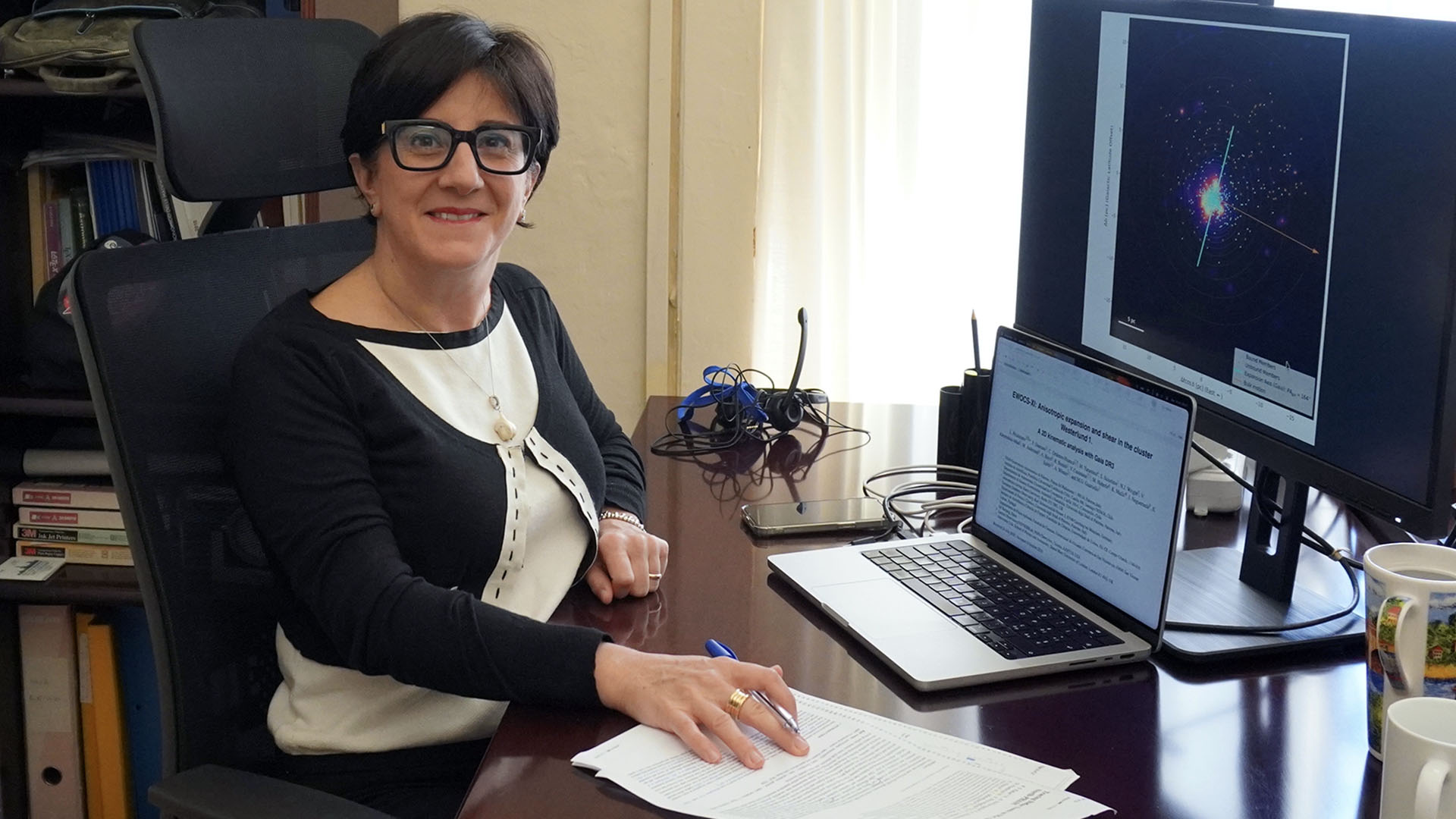
Loredana Prisinzano (Inaf Oa Palermo), prima autrice dello studio in uscita su A&A

L’espansione dell’ammasso è asimmetrica, come già dimostrato in altri studi pubblicati di recente. Tuttavia, l’analisi dei dati di Gaia ha permesso di stabilire che la regione esterna di Westerlund 1 è allungata in direzione perpendicolare al piano della Via Lattea, subendo una distorsione probabilmente causata dalle forze mareali della nostra galassia. Inoltre, il suo tempo di espansione cinematica (2.08 milioni di anni) corrisponde al momento in cui Westerlund 1 ha attraversato il piano galattico (2.1 milioni di anni fa). Tra i diversi fattori che potrebbero spiegare tale evoluzione dinamica, questa coincidenza temporale suggerisce una possibile conseguenza dell’interazione avvenuta circa due milioni di anni fa tra Westerlund 1 e la materia (stelle e nebulose) che popola il piano della Via Lattea.

«Questo studio è la dimostrazione lampante di come il satellite Gaia sia una vera e propria “macchina da guerra” per lo studio dei moti propri stellari», dice Prisinzano, «e Westerlund 1 ne rappresenta un banco di prova estremo. Situato a oltre 13mila anni luce di distanza e pesantemente oscurato dalle polveri interstellari, è un oggetto per il quale le parallassi misurate da Gaia presentano incertezze troppo elevate per fornire distanze precise. Tuttavia, la qualità dei moti propri rimane impressionante. È proprio grazie a queste piccolissime incertezze nei movimenti trasversali delle stelle che abbiamo potuto identificare i membri dell’ammasso e condurre un’analisi cinematica estremamente accurata. Questo ci ha permesso di svelare non solo le complesse dinamiche di espansione e distorsione di questo superammasso, ma anche di trovare prove evidenti di un processo di dissoluzione in atto».

Per saperne di più:


Microsoft Patches More Than 1,400 Security Flaws

14 Ottobre 2026 ore 01:24

Microsoft today issued updates to fix more than 1,400 security vulnerabilities in its Windows operating systems and other software. Today’s epic patch batch dwarfs September’s record of nearly 1,000 fixes, which was already about ten times the normal monthly patch load from Redmond.

Just one of the weaknesses patched this week is considered a “zero day,” or already exploited in the wild. CVE-2026-96951 is a security feature bypass in the Windows Shell that affects Windows 10 and 11 systems, as well as some Server versions.

Windows 10 users might be wondering if they can still expect security updates after this month. Microsoft had been slated to stop shipping updates for Windows 10 systems in October 2025, but ended up adding another year of free updates after considerable pushback. A few months ago, Microsoft quietly extended that support for another year (until October 2027).

At least 78 of the flaws fixed this month are rated “critical,” meaning they could be exploited with little or no action by the user, and most of those critical bugs allow an attacker to execute code of their choice on the vulnerable system.

While Microsoft said there are no signs anyone is exploiting it yet, a security feature bypass in the .NET Framework (CVE-2026-108398) was publicly disclosed prior to today, potentially giving attackers advance time to work out how to exploit the bug.

Satnam Narang at Tenable said the number of flaws fixed this month far surpasses the previous record-setting year 2020, when Microsoft patched 1,261 CVEs.

“We’ve now crossed the 4,000 CVE mark with two months left to go,” he said.

Microsoft credits large language models for the high volume of bug discovery, and presumably AI gets credit for many of the patches used to fix these flaw. Meanwhile, security experts have been warning that these unusually large patch volleys from Microsoft are placing extra strain on corporate security teams, which often have to test individual updates before deploying them across a network to ensure the fixes don’t cause problems for other software.

Tyler Reguly, associate director of security research and development at Fortra, notes that just 26 Microsoft vulnerabilities appeared in the “Known Exploited Vulnerabilities” (KEV) catalog maintained by the U.S. Cybersecurity & Infrastructure Security Agency (CISA) so far this year, and security teams would do well to prioritize patching those 26 vulnerabilities first.

“Security leaders should focus on exploitable risk, and ask whether their teams have the clarity, capacity and support to act,” Reguly said.

Which vulnerabilities deserve the most scrutiny in your organization? The folks at Cisco Talos have a useful roundup of the more noteworthy flaws that Microsoft fixed today, and of course the SANS Internet Storm Center has a reliable roundup that indexes vulnerabilities by severity, CVE number and affected software.

Identificazione degli effetti sismo-indotti della sequenza in Italia centrale del 2016-2017 mediante dati satellitari

2 Ottobre 2026 ore 11:59

La sequenza sismica in Italia centrale del 2016-2017 ha avuto  più di 60 terremoti di magnitudo Mw > 4.0 tra il 24 agosto 2016 e il mese di gennaio 2017, causando oltre 300 vittime e ingenti danni agli edifici e al patrimonio artistico e culturale di un’area appenninica piuttosto vasta. La sequenza è stata caratterizzata da alcuni eventi principali [Amatrice/Accumoli (RI) – 24/08/2016, Visso (MC) – 26/10/2016, Norcia (PG) – 30/10/2016 e Capitignano (AQ) – 18/01/2017], che hanno prodotto significative deformazioni superficiali, con uno spostamento massimo di circa 70 cm nella Piana di Castelluccio di Norcia, rilevato attraverso le osservazioni satellitari. Oltre alle deformazioni su larga scala, la sequenza ha innescato fenomeni localizzati, quali frane e riattivazioni di faglie secondarie, contribuendo ad aumentare il dissesto dell’area. Questo lavoro si propone di identificare tali effetti sismo-indotti mediante l’utilizzo della tecnica dell’interferometria SAR (InSAR) [Massonnet et al., 1993], applicata a dati satellitari in banda X e C relativi a quattro casi studio: Monte Vettore, Bolognola, Podalla e Cicconi (Figura 1). I risultati evidenziano il contributo delle osservazioni multi-banda per la valutazione della pericolosità ambientale e il monitoraggio post-sisma.

Figura 1 Panoramica dell’area di studio. I cerchi rossi rappresentano le quattro aree analizzate e interessate da fenomeni sismo-indotti. Le stelle gialle indicano gli epicentri dei quattro eventi principali della sequenza sismica in Italia centrale del 2016-2017.

Il dataset utilizzato

Il dataset utilizzato in questo studio è riassunto in Tabella 1. Esso comprende diversi interferogrammi generati per ciascun caso studio a partire da coppie di immagini SAR acquisite dalle missioni COSMO-SkyMed (CSK), in banda X, e Sentinel-1 (S1), in banda C. L’analisi è stata condotta mediante il software GAMMA, specificamente sviluppato per l’elaborazione interferometrica dei dati SAR [Wegmüller and Werner, 1997].

Tabella 1 Dataset SAR utilizzato in questo studio.

I casi studio

Monte Vettore
I risultati InSAR ottenuti da immagini acquisite da CSK hanno evidenziato un segnale deformativo sul versante del Monte Vettore, strettamente correlato alla fase cosismica del terremoto di Amatrice (Mw 6.0), del 24 agosto [Bignami et al., 2016]. La deformazione rilevata lungo la Linea di Vista del satellite (Line-of-Sight, LoS) è localizzata sul versante sud-occidentale e raggiunge uno spostamento massimo di circa 12 cm (Figura 2). Tale deformazione è associata a una frattura continua, lunga circa 5 km, osservata lungo il versante e identificata anche durante i rilievi di campagna, probabilmente riconducibile alla combinazione di processi deformativi tettonici e gravitativi [Albano et al., 2016].

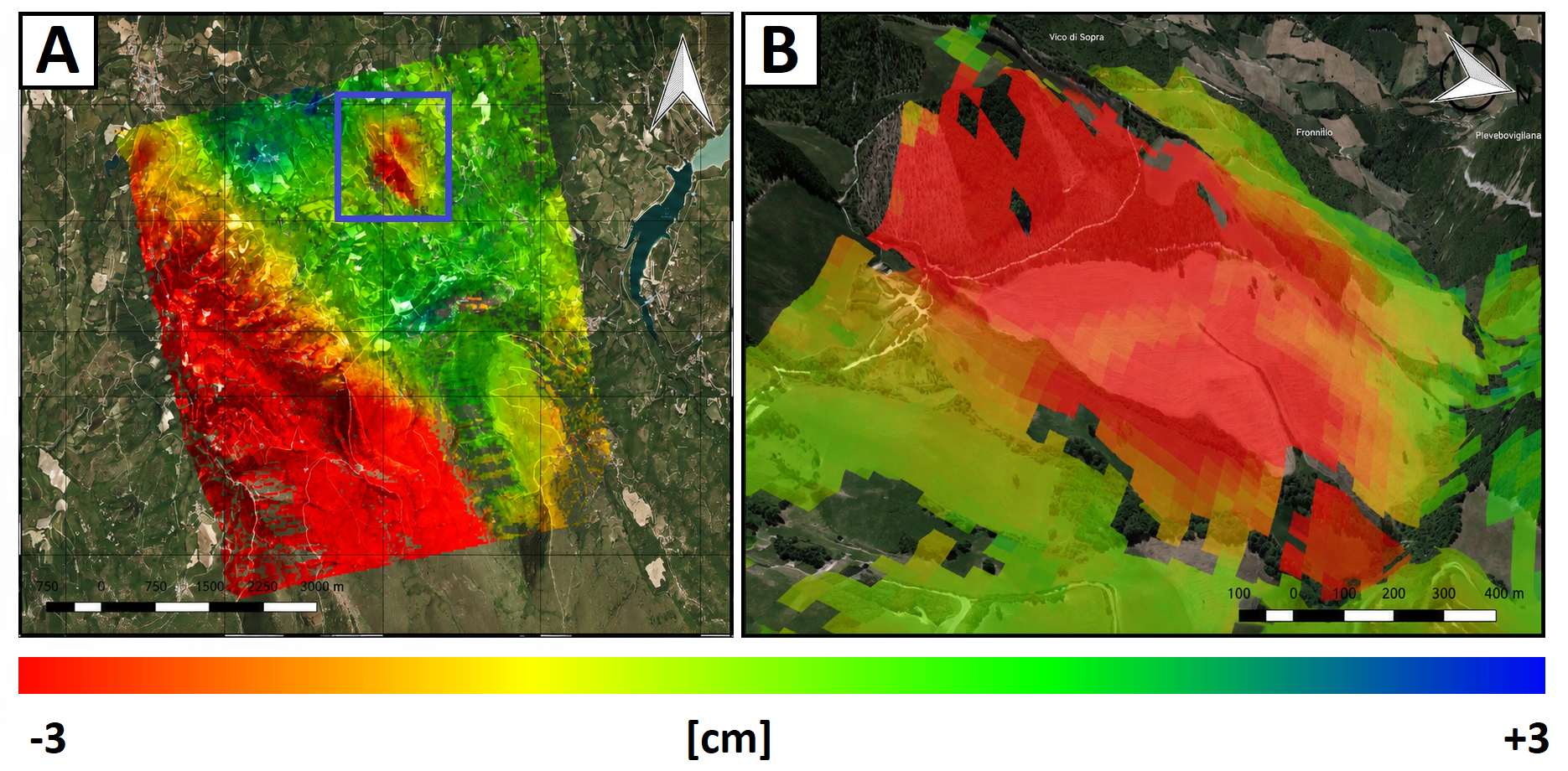
Figura 2 Mappa di spostamento 2D lungo la LoS relativa al caso di studio del Monte Vettore. Nell’angolo in basso a sinistra dell’immagine è visibile parte della deformazione cosismica indotta dall’evento di Amatrice/Accumoli mentre l’area in esame è evidenziata con un rettangolo blu [A]. Focus in 3D dell’area analizzata [B].
Bolognola
In questo caso studio, sono stati utilizzati dati SAR acquisiti sia da CSK sia da S1 per identificare un fenomeno deformativo localizzato circa 25 km a NE degli epicentri dei terremoti di Visso e Norcia, nel settore settentrionale dei Monti Sibillini, in prossimità dell’abitato di Bolognola (MC). I risultati evidenziano uno spostamento localizzato di circa 2.5 cm lungo la LoS, associato a una frana con movimento prevalente da NO verso SE. L’intervallo temporale coperto dalle acquisizioni delle immagini Sentinel-1 comprende sia gli eventi sismici di Visso e Norcia che le relative repliche. Pertanto, non è possibile determinare con certezza quale evento abbia innescato il movimento franoso.
Figura 3 Mappa di spostamento 2D lungo la LoS relativa al caso di studio di Bolognola. Nell’angolo in basso a sinistra dell’immagine è visibile parte della deformazione cosismica indotta dagli eventi di Visso e Norcia mentre l’area in esame è evidenziata con un rettangolo blu [A]. Focus 3D sull’area analizzata [B].
Podalla
La Deformazione Gravitativa Profonda di Versante (DGPV) di Podalla (MC) è localizzata in prossimità della diga del Lago di Fiastra ed è stata precedentemente studiata mediante dati InSAR, evidenziando una potenziale predisposizione a deformazioni significative [Tolomei et al., 2013]. In particolare, la DGPV di Podalla è stata identificata come un sackung (insaccamento) con direzione NE e caratterizzata da un piano di scivolamento immergente verso NO. I risultati InSAR ottenuti dalle immagini S1 mostrano un campo di spostamento con una deformazione LoS massima di circa 2–2.5 cm, rilevata sia durante il terremoto di Amatrice sia per gli eventi di Visso e Norcia. Pertanto, la DGPV di Podalla sembra essersi ri-attivata in seguito ai primi tre eventi principali della sequenza sismica in Italia centrale del 2016–2017, determinando uno spostamento cumulativo lungo la LoS di circa 5 cm.
Figura 4 Mappa di spostamento 2D lungo la LoS relativa al caso di studio di Podalla in seguito all’evento di Amatrice/Accumoli. L’area in esame è evidenziata con un rettangolo blu [A]. Focus 3D sull’area analizzata [B].
Cicconi
Anche in questo caso sono stati utilizzati sia i dati CSK sia quelli S1. I risultati mostrano che l’area circostante l’abitato di Cicconi, nel territorio comunale di Fiastra (MC), ha subito una deformazione LoS localizzata di circa 2–2.5. L’area è situata circa 25 km a nord-est degli epicentri dei terremoti di Visso e Norcia; tuttavia, sulla base delle date di acquisizione delle immagini, è possibile identificare il terremoto di Visso del 26 ottobre 2016 come l’evento responsabile della riattivazione di questa frana, caratterizzata da un movimento prevalente da SO verso NE.
Figura 5 Mappa di spostamento 2D lungo la LoS relativa al caso di studio di Cicconi. Nell’angolo in basso a sinistra dell’immagine è visibile parte della deformazione cosismica indotta dall’evento di Visso mentre l’area in esame è evidenziata con un rettangolo blu [A]. Focus 3D sull’area analizzata [B].

I risultati dell’analisi 

Durante e dopo forti terremoti possono verificarsi diversi effetti indotti dall’attività sismica, in grado di generare ulteriori condizioni di pericolo sia per l’ambiente sia per la popolazione. A seconda della posizione degli epicentri e dei meccanismi di faglia responsabili degli eventi, gli effetti secondari possono includere la generazione di tsunami, il crollo di edifici, fenomeni di liquefazione dei terreni, valanghe e frane [Alasset et al., 2006; Chini et al., 2015; Piscini et al., 2017; Rodrı́guez et al., 1999].  Questo lavoro si concentra sugli effetti locali indotti dalla sequenza sismica in Italia centrale del 2016–2017 nelle aree dell’Appennino centrale colpite. I dati InSAR acquisiti dalle missioni CSK in banda X e S1 in banda C hanno permesso di rilevare deformazioni locali indotte dai terremoti in quattro aree dei Monti Sibillini: Monte Vettore, Bolognola, Podalla e Cicconi. Sono stati ricostruiti i relativi campi di spostamento dell’ordine di pochi centimetri lungo la LoS, principalmente interpretati come associati a fenomeni franosi e fagliazione secondaria. I fenomeni osservati sono stati innescati dai primi tre eventi principali della sequenza, ovvero i terremoti di Amatrice, Visso e Norcia. L’ultimo evento tra quelli principali, il terremoto di Capitignano (Mw 5.5), si è verificato nel mese di gennaio 2017 durante la stagione invernale e ha interessato un’area in gran parte ricoperta da neve. Tali condizioni hanno limitato l’utilizzo di dati InSAR in banda X e C, a causa di significativi effetti di decorrelazione temporale nelle acquisizioni SAR. In particolare, la rapida evoluzione del manto nevoso nell’intervallo temporale tra due acquisizioni, dovuta, ad esempio, a variazioni dello spessore, redistribuzione della neve o processi di fusione, modifica le proprietà di scattering e quindi la risposta elettromagnetica della superficie. Tali cambiamenti riducono notevolmente la correlazione tra le immagini SAR causando perdita di coerenza ed assenza di segnale informativo.

Questo lavoro ha dimostrato la capacità dei dati InSAR di identificare fenomeni deformativi su piccola scala indotti dai terremoti, in particolare nelle aree montane. In contesti topografici complessi, come quelli interessati dalla sequenza sismica in Italia centrale del 2016–2017, le indagini sul campo possono risultare difficoltose a causa della limitata accessibilità delle aree e del potenziale innesco di fenomeni franosi o riattivazioni di faglie secondarie. L’InSAR rappresenta un potente strumento per la valutazione e la mappatura rapida della pericolosità ambientale, fornendo osservazioni spazialmente estese e sicure sia della deformazione cosismica sia dei fenomeni deformativi sismo-indotti. 

A cura di Marco Polcari, Christian Bignami, Marco Moro, Salvatore Stramondo, Cristiano Tolomei, ONT-INGV

Bibliografia

Alasset, P.-J., Hébert, H., Maouche, S., Calbini, V., and Meghraoui, M. [2006]. The tsunami induced by the 2003 Zemmouri earthquake (MW = 6.9, Algeria): modelling and results. Geophysical Journal International, 166(1), 213–226. https://doi.org/10.1111/j.1365-246X.2006.02912.x 

Albano, M., Saroli, M., Moro, M., Falcucci, E., Gori, S., Stramondo, S., Galadini, F., and Barba, S.. [2016]. Minor shallow gravitational component on the Mt. Vettore surface ruptures related to MW 6, 2016 Amatrice earthquake. Annals of Geophysics, 59, 2. https://doi.org/10.4401/ag-7299 

Bignami, C., Tomolei, C., Pezzo, G., Guglielmino, F., Atzori, S., Trasatti, E., Antonioli, A., Stramondo, S. and Salvi, S. [2016]. Source identification for situational awareness of August 24th 2016 Central Italy event. Annals of Geophysics, 59, 25. https://doi.org/10.4401/ag-7233 

Chini, M., Albano, M., Saroli, M., Pulvirenti, L., Moro, M., Bignami, C., … Stramondo, S. [2015]. Coseismic liquefaction phenomenon analysis by COSMO-SkyMed: 2012 Emilia (Italy) earthquake. International Journal of Applied Earth Observation and Geoinformation, 39, 65–78. https://doi.org/10.1016/j.jag.2015.02.008 

Massonnet, D., Rossi, M., Carmona, C., Adragna, F., Peltzer, G., Feigl, K., and Rabaute, T. [1993]. The displacement field of the Landers earthquake mapped by radar interferometry. Nature, 364(6433), 138–142. https://doi.org/10.1038/364138a0 

Piscini, A., Romaniello, V., Bignami, C., and Stramondo, S. [2017]. A New Damage Assessment Method by Means of Neural Network and Multi-Sensor Satellite Data. Applied Sciences, 7(8), 781. https://doi.org/10.3390/app7080781 

Rodrı́guez, C. E., Bommer, J. J., and Chandler, R. J. [1999]. Earthquake-induced landslides: 1980–1997. Soil Dynamics and Earthquake Engineering, 18(5), 325–346. https://doi.org/10.1016/S0267-7261(99)00012-3 

Tolomei, C., Taramelli, A., Moro, M., Saroli, M., Aringoli, D., and Salvi, S. [2013]. Analysis of the deep-seated gravitational slope deformations over Mt. Frascare (Central Italy) with geomorphological assessment and DInSAR approaches. Geomorphology, 201, 281–292. https://doi.org/10.1016/j.geomorph.2013.07.002 

Wegmüller, U., and Werner, C. [1997]. GAMMA SAR Processor and Interferometry Software. Presented at the 3rd ERS Scientific Symposium. Retrieved from https://www.gamma-rs.ch/uploads/media/1997-1_GAMMA_Software.pdf


Licenza

Licenza Creative Commons

Quest’opera è distribuita con Licenza Creative Commons Attribuzione – Non opere derivate 4.0 Internazionale

11 SETTEMBRE. 25 ANNI DI BUGIE. 25 ANNI DI CRIMINI

«… i nuovi documenti pubblicati dall’amministrazione di Zohran Mamdani hanno rivelato come le autorità di New York hanno ingannato il grande pubblico sulla qualità dell’aria a Ground Zero dopo gli attacchi dell’11 settembre dove, nonostante i proclami, si respirava amianto.» [1]


Sono 25 anni che la propaganda a reti unificate ci propina l’incredibile versione che le autorità statunitensi hanno accreditato: due aerei hanno abbattuto tre grattacieli, la fusoliera di un altro aereo ha bucato uno dei muri più blindati del Pentagono mentre i due motori non lo hanno nemmeno graffiato e un quarto aereo si è schiantato in un prato senza lasciare i più comuni rottami.

Ora finalmente comincia a sgretolarsi il muro di gomma, almeno per la parte che mette sotto accusa tutte le autorità precedenti di mancato allarme. Nel gioco delle parti della pseudodemocrazia americana non è consentito di più.

Era del tutto impossibile che l’enorme nuvola di detriti sollevatasi a Manhattan non fosse altamente nociva. Le Torri dovevano essere smantellate contenendo alte quantità di amianto. Più facile e infinitamente meno costoso buttarle giù. Il costo lo avrebbero pagato i cittadini di New York e in prima fila i suoi eroici pompieri.

Infatti, secondo quanto emerge dalle 170mila pagine di documenti sulla qualità dell’aria dopo gli attentati pubblicati dall’amministrazione della città, si mostra che l’amianto fu trovato “quasi dovunque” vicino all’area delle torri gemelle mentre le autorità rassicuravano la popolazione del contrario. In seguito le malattie legate a polveri e fumi hanno causato più morti degli attentati, ove morirono 2.977 persone.

La “Guerra al Terrorismo”, inaugurata allora contro un nemico perfetto che loro definiscono di volta in volta in base ai loro interessi, ha portato morte e distruzione in Afghanistan, Iraq, Yemen, Pakistan, Somalia, Libia, Siria, Venezuela, Nigeria e Iran.

Oltre 940.000 morti “diretti”. Di questi, più di 432.000 sarebbero civili. Poi ci sono le morti “indirette (crollo dei sistemi sanitari, fame, malattie, infrastrutture distrutte). Al Jazeera, citando il Watson Institute, indica un range di 3,6–3,8 milioni di morti indirette.

Al cittadino americano finora ciò è costato 5.800 miliardi di dollari a oggi. Coi costi futuri per i veterani: almeno 2,2 trilioni nei prossimi decenni.

Non ci sono le parole per commentare e forse non servono neanche.


[1] https://www.ansa.it/sito/notizie/topnews/2026/09/09/la-rabbia-dei-pompieri-di-new-york-per-lamianto-nellaria-dopo-l119_c7168942-f9b4-4ba2-ae57-31aad909399f.html

Condividi !

Shares

L'articolo 11 SETTEMBRE. 25 ANNI DI BUGIE. 25 ANNI DI CRIMINI proviene da IL PARTITO COMUNISTA - Sito Ufficiale.

Two Alleged ‘TeamPCP’ Hackers Arrested in Australia

27 Agosto 2026 ore 13:04

Authorities in Australia have arrested two men believed to be members of TeamPCP, a prolific cybercrime and data extortion group blamed for perpetrating the longest running spree of software supply chain attacks ever.

In a statement released today, the Australian Federal Police (AFP) said two men from Western Australia, aged 21 and 23, were arrested in connection with a “sophisticated cybercrime syndicate that allegedly created malicious open-source software to rob thousands of global businesses.”

The AFP did not name the defendants, but KrebsOnSecurity learned the 21-year-old suspect’s real identity in June, and has been communicating with him ever since. This story includes interviews with TeamPCP’s self-described spokesperson, and examines clues left behind by the TeamPCP leader that likely led to his undoing.

TeamPCP vaulted onto the cybercrime scene in late 2025, embedding malicious code in hundreds of open source software tools and extorting victims for profit. Members of the group made headlines by compromising corporate cloud environments using a self-propagating worm dubbed Shai-Hulud, which added malicious code to open source programs maintained by developers whose credentials at public code repositories like GitHub or NPM were phished or stolen.

Writing for Wired, journalist Andy Greenberg described TeamPCP’s core tactic as a kind of cyclical exploitation of software developers.

“The hackers gain access to a network where an open source tool commonly used by coders is being developed,” Greenberg wrote in May. “The hackers plant malware in the tool that ends up on other software developers’ machines, including some who are writing other tools intended to be used by coders. The malware allows TeamPCP’s hackers to steal credentials that let them publish malicious versions of those software development tools, too. The cycle repeats, and TeamPCP’s collection of breached networks grows.”

TeamPCP also has practiced something akin to cyclical recruitment. In May, the source code for the third iteration of Shai-Hulud was published online, and TeamPCP soon after launched a contest offering $1,000 in virtual currency to whichever participant could conduct the largest supply chain operation using the worm’s code. According to the contest rules, participants were scored based on the number of weekly and monthly downloads of packages they compromised — directly incentivizing them to target the most popular code libraries.

A screenshot of a message from TeamPCP’s Telegram account, announcing the supply chain hacking contest. Image: dataminr.com.

“TeamPCP has stated the competition is a recruiting opportunity and they intend to purchase all meaningful access harvested from participants’ campaigns,” the security firm Dataminr wrote. “The $1,000 XMR (Monero) prize is a recruitment floor and has been dismissed by the actor as ‘just like participation trophy,’ adding ‘if you find something good you will be paid way more,’ confirming the contest’s true function as talent identification and malicious access acquisition at scale.”

In March, TeamPCP executed a supply chain attack targeting AI infrastructure by compromising the code for LiteLLM, an open source AI gateway that connects users to more than 100 different large language models. A recent analysis by the security firm CloudSEK found TeamPCPs attack on LiteLLM harvested cloud service keys and other secrets from more than 2,500 organizations, including many of the world’s top technology companies.

In May, TeamPCP claimed credit for compromising at least 3,800 code repositories at the Microsoft-owned GitHub, after a GitHub developer installed a code extension that was compromised by TeamPCP’s malware.

MEET THE CYBERCATS

Security experts say TeamPCP is less of a hacker group than an amalgamation of threat actors from multiple cybercriminal gangs who sometimes work together toward similar goals.

“It is not a structured criminal crew with a single operator,” said Austin Larsen, a principal threat analyst with the Google Threat Intelligence Group. “It is a peer community of individually-skilled actors, with one clear center of gravity.”

That center of gravity is George Prepakis, an accomplished security researcher and self-described exploit developer who operates the Twitter/X profile @kernelstub. Earlier this year, @kernelstub tweeted a public invite link to a Matrix chat server he created and dubbed “Cybercats,” and TeamPCP and several other cybercrime entities have been using this server to communicate daily for the past several months.

A screenshot of the Matrix chat server “Cybercats,” whose members used hacker handles associated with multiple distinct cybercrime groups that have occasionally collaborated on a series of supply chain and data ransom attacks over the past nine months.

Kernelstub, like other administrators in the Cybercats chat, has been using his Twitter/X profile name as his handle in these Matrix communications, frequently tweeting references to other members and to conversations taking place in the Cybercats chat. In a number of cases, the corresponding X accounts for members of the Cybercats chat taunted cybercrime victims publicly before the incidents were reported in the news media.

The Cybercats administrator listed at the top of the screenshot above — “Boxturtle” — is a close associate of TeamPCP who has been tweeting about the group’s conquests under the name @xpl0itrsturtle. This handle corresponds to a data breach broker active on Breachforums and Darkforums who has been selling data stolen in a wave of recent breaches at automobile manufacturers, including BMW Group, Audi, Honda, Mercedes-Benz, Volvo and Toyota, as well as data allegedly taken from Snapchat and SportRadar.

The data leak site for the extortion group or handle “xpl0itrs.”

The Cybercats administrator “SeesawSec” in the screenshot above is the alias of whoever is behind the cybercrime group known as Fulcrumsec, which recently claimed credit for data extortion attacks against the pharmaceutical giant Novo Nordisk, the data broker LexisNexis, and Avnet, a Fortune 500 distributor of electronic components.

The data leak site of Fulcrum Security, a.k.a. Fulcrumsec.

The Cybercats administrator “@pcpcasper” also has been using a similar name on X to discuss TeamPCP’s attacks and victims. This person has an extensive message history on Telegram, where their messages and shared videos show @pcpcasper is an active and vocal member of the National Socialist Network, a neo-Nazi political organization based in Australia.

At one point in these chats, @pcpcasper shared videos and images of what they claimed was their cat, and several of those videos place this user in Western Australia. One source close to the investigation told KrebsOnSecurity that @pcpcasper was one of the two arrested, a claim supported by messages that @kernelstub posted online this morning.

The Cybercats member roster pictured above also features an administrator with the username “T,” which is short for the now-banned Twitter/X profile @pcpcats, the account operated by the self-described TeamPCP spokesperson who was arrested today. As we’ll see in a moment, @pcpcats also is from Western Australia.

By the time @kernelstub tweeted a public invite link to the Cybercats Matrix server, T/@pcpcats was posting only infrequently to the group chat, with other members often inquiring as to his whereabouts and well-being. The group’s collective concern related to @pcpcats’s tendency to blame his increasingly extended absences on the use of hallucinogens and other narcotics that kept him awake for days on end, but also caused him to crash in bed for several days after the highs wore off.

WHO IS THE TEAMPCP LEADER?

The Cybercats member @pcpcats has used multiple nicknames on the cybercrime forums, including EllisD25/LSD on Darkforums, BulkDMT on Breachstars, and Express on Breachforums. These accounts are linked because they all advertised the same Tox ID and/or Session ID as instant message contact handles in their cybercrime forum posts. BulkDMT was also known on the forums as DMT Host, which was a virtual private server (VPS) hosting service that was peddled on Darkforums and Breachstars.

DMT Host/EllisD25, posting on the English-language cybercrime community DarkForums in September 2025. Image: ke-la.com.

According to the cyber intelligence firm Intel 471, Express registered on Breachforums using the email address shitstickpp@gmail.com. Intel 471 finds Express posted on Breachforums across a two-month period in 2025 using four different Internet addresses located in South Africa. On July 30, 2025, Express announced on Breachforums they were selling access to 14 gigabytes of data stolen from South Africa’s State Information Technology Agency.

The threat intelligence platform Flashpoint recorded more than a year’s worth of messages from the TeamPCP leader’s alter ego on Telegram — Persy_PCP —  who claimed they split their life living between two countries [full disclosure: Flashpoint is an advertiser on this blog]. “I have these [files] as well, problem is these are in another country,” Persy_PCP explained to another user inquiring about a stolen data set in November 2025.

Later that month, Persy_PCP complained, “My whole country is racist and they want people like me dead.” Flashpoint records show BulkDMT shared in September 2025 that “this country is going to fucking starve when they take the farmers land,” a likely reference to white landowners in South Africa who claim to be targeted by an ongoing genocide campaign.

This tracks with public reporting on TeamPCP. Cyberscoop reported in June that Google had traced TeamPCP’s residential and mobile Internet address connections to South Africa, “indicating the primary operator was located there during at least some of its attacks.”

BulkDMT also shared on the group chat at Breachforums that they were recovering from an addiction to methamphetamine. “My life is kinda fucked rn [right now], but that’s fine and there isn’t really a point in pouring so much emotional energy into that fact, my parents had money but I unfortunately got really addicted to some things so I don’t get to benefit from that. As long as I continue to survive, stay sober, and move closer towards my goals that’s enough drive and meaning.”

The identity threat protection company SpyCloud finds shitstickpp@gmail.com shows up in the registration of an account called ChristmasSnow on the cybercrime community Raidforums in 2022. Nearly all of the Internet addresses used to access that account came from ISPs in Perth, Australia, SpyCloud found.

KrebsOnSecurity looked up all of those Perth IP addresses in passive DNS records maintained by DomainTools.com, and found one of them — 211.27.196.111 — for several years was used as a private file server by a family in Perth with the last name of Thomson. Those records show at least three hosts — ithomson.direct.quickconnect.to (a remote Synology server), kthomson0061.direct.quickconnect.to, and joshuawthomson39.myqnapcloud.com (a QNAP network storage device) — persisted at that address between 2022 and 2025.

Searching on “joshuathomson39” in the breach tracking service Constella Intelligence reveals an account at the freight forwarding company kwe.com created in the name of Joshua Thomson from Perth, Australia. The open source intelligence platform Epieos finds the phone number attached to that kwe.com account was used to register a Facebook profile for Josh Thomson, which says his family includes a brother named Ruben, his father Ian, and his mom Cindy.

That Facebook profile also says Josh and his family are originally from Pietermaritzburg, in KwaZulu-Natal, South Africa, but currently living in Cottesloe, a beach-side suburb of Perth. A search in DomainTools for Ian Thomson and Australia unearthed five domains by the same registrant, including securecomputing.au, thomson.org.au, and thomsonfamily.net.au. Ian Thomson is a dentist in Cottesloe, and a biography says he graduated from The University of the Witwatersrand in Johannesburg, South Africa.

Constella finds a joshua@thomson.org.au registered a number of accounts online, but Josh doesn’t seem to have much of a connection to dodgy cybercrime forums. His brother Ruben, on the other hand, has quite the presence on these communities, dating back to at least 2018. Constella reports ruben@thomson.org.au frequently reused the password “joshuathomson1,” and Constella further finds that password was used by just a handful of accounts, including yolosolo17@gmail.com and surfinup8@gmail.com.

According to Intel 471, surfinup8@gmail.com was used to register the user Yolosolo17 on the crime forum Altenen in 2018, and that user account was registered from the Perth address 110.141.230.15. On Altenen, Yolosolo17 advertised free web proxies, as well as the domain rubenthomson.com, which was at one point used to sell steeply discounted iPhones. DomainTools says rubenthomson.com was hosted at 110.141.230.15 and registered to surfinup8@gmail.com.

A cached copy of the domain rubenthomson.com from 2017 shows a login page underneath a banded stack of money. Image: archive.org.

SpyCloud reports 10.141.230.15 was used by the email address sheepstealing@gmail.com on Raidforums and surfinup8@gmail.com on Nulled, and that the same IP was used by the email addresses ian@thomsonfamily.net.au, jasper@yakuza.cc, and rubenthomson1@gmail.com. SpyCloud also shows that sheepstealing Gmail address is tied to the accounts Sheep420, YoloSolo117 and Yakuza.cc on Raidforums, and to the account “Sheep Stealing” on Hackforums. Intel 471 says sheepstealing@gmail.com was used to register the account DingoFlour on Breachforums in October 2023, as well Sheepx on Altenen.

Epieos reports that ruben@securecomputing.au is tied to an Airbnb account for Ruben, who described himself as a Web developer who went to school at the University of Western Australia and was living outside the country. “Hey, I’m Ruben, my friends call me Ellis. I’m a Perth creative who occasionally books rooms when visiting family and for photography.”

Epieos also finds sheepstealing@gmail.com registered an upwork.com profile under the name Ruben, who said his main skills are setting up secure server hosting solutions and PHP full-stack Web development.

“I’m familiar with Linux, working with relational databases (SQL),” the Upwork profile reads. “I also script in Python mainly for writing social media bots.”

The Upwork profile for Ruben Thomson in Cottesloe, Australia.

Epieos further discovered sheepstealing@gmail.com is connected to a Microsoft account for Ruben Thomson, and to a now-defunct GitHub account called XmasSnow/XmasSnowisBack that scammed people on the forums in 2022 by claiming to sell exclusive exploits for recently-released software patches (recall that shitstickpp@gmail.com was used to register a forum account named ChristmasSnow).

This same sheepstealing email address registered a Twitter/X account in 2026 called “Gone Fishing” that lists its location as South Africa. That Gmail account also left several reviews for businesses listed on Google Maps over the past seven years, but all of those establishments are located on the west coast of Australia.

Business reviews in Western Australia left by the Google account sheepstealing at gmail.com.

The people search service Pipl finds a 21-year-old Ruben Thomson in Western Australia who has a phone number ending in 979. A lookup on that number at Epieos reveals it is connected to a TikTok account under the name Ellis, and to a PayPal account in the name of Ruben Thomson.

Finally, a search on the name Ruben Thomson from Cottesloe at the Australian government’s record of registered businesses finds he has incorporated or served as an official in multiple companies created since 2024, including Secure Computing Solutions, Tensor Industries, and another entity ironically named OPSEC Express. Recall that Express was BulkDMT’s nickname on Breachforums.

Australian companies connected to Ruben Thomson. Image: abr.business.gov.au.

It’s ironic because OPSEC is short for the term “operational security,” which refers to techniques and behaviors used to obfuscate and compartmentalize one’s real-life identity online, and using your cybercrime handle as part of your own company name is very much the antithesis of that practice.

There is at least one other major opsec failure by Ruben that exposed a link to TeamPCP. In June 2025, someone using the name Ruben Thomson registered on HackerOne, a popular “bug bounty” program that seeks to reward and recognize researchers who agree to work with affected software vendors to help fix the flaws before publishing about their findings. What was Ruben Thomson’s chosen HackerOne username? Deadcatx3, a nickname that has been flagged by multiple security firms as an alias used by TeamPCP.

The HackerOne profile for “Ruben Thomson” uses the nickname Deadcatx3, which multiple security firms have concluded is an alias used by TeamPCP. Image credit: flare.io.

INTERVIEW WITH ELLIS

In early July 2026, not long after having discovered clues about Ellis’s real life identity, KrebsOnSecurity interviewed the TeamPCP leader via Signal, where he was remarkably open about his activities and personal struggles [for the sake of simplicity, the TeamPCP spokesperson will be referred to from here on as Ellis].

Ellis claims he stopped doing cybercrime for TeamPCP in March 2026 — just before the attacks that compromised LiteLLM — and that at least one other individual has taken over the group’s leadership since then. Ellis shared that a year earlier he had just completed the latest in a series of detox and sobriety programs, and was two months sober when he reconnected with some old friends from the malware development scene.

“One year ago I needed help monetizing some [GitHub credentials], I was two months sober and needed a distraction and something to keep busy as well as people to speak to,” Ellis said. “I had largely disconnected from my old circle, they had become very toxic and I needed to get away from the substances. Previously I had done some mass exploitation campaigns and grew up doing [malware development] and [capture the flag] contests. There were some friends who were also vending but had stopped a while, and one of them introduced me to some chats where I posted access for sale.”

Prior to that, Ellis said, he was homeless and hopping between “some very unstable places.”

“Blackhatting is fun,” he said. “There are actual rewards and incentives to learn and you grow with your team. Without qualifications, no employer will even take the time to hear you out.”

Ellis claims he’s earned a grand total of about $20,000 for his activities with TeamPCP, and that it was never about the money or fame for him. Asked whether his experiences with TeamPCP might prepare him for gainful employment in a legitimate IT job, Ellis said he doubted it.

“I am nowhere close to a skill level where I am comfortable, and this would take maybe half a decade of further experience,” he said. “I no longer have to choose between rent and food for that I’m grateful and so are the team members.”

Ellis expressed no remorse over his cybercrime activities, and said he was grateful for the friendships and relationships built throughout his engagement with TeamPCP. The young hacker also seemed resigned to his fate, and told KrebsOnSecurity that he’ll accept the consequences if he’s ever arrested.

“If I’ve already been found out then its out of my control, I’ll make peace with that,” he said. “Honestly, I think someone like me needs a lot of help that prison just can’t provide. If I had the funds to study different parts of the field and closer guidance, this would have turned out differently. But that’s a pipe dream and we both know this.”

It is clear from reading Ellis’s posts to the group’s Matrix server chats that his struggles with sobriety are ongoing. On Thursday, June 25, Ellis told @kernelstub he was about to “trip” with his “homie.”

“What kind,” @kernelstub inquired.

“Ketty and some DMT,” Ellis replied, referring to the dissociative anesthetic ketamine and dimethyltryptamine (DMT), a powerful psychedelic compound that is found naturally in some plants but is also synthetically produced in underground lab environments. “There’s a little 2cb so we might throw that in the mix,” he continued, referring to another psychedelic compound by its chemical shorthand.

Roughly two weeks before his arrest, Ellis told KrebsOnSecurity he was ready to leave his life of crime behind and was prepared to turn himself in, but that in the meantime he was making plans to tie up loose ends.

Less than 24 hours later, the TeamPCP leader posted an image on Telegram showing a yellowish powdered substance in a baggie and on a scale, possibly synthetic DMT. The image shows the powder being weighed next to a series of small vape cartridges, two of which are open on the table in front of the photographer.

An image posted by the TeamPCP leader to Telegram, advertising his acquisition of some type of psychoactive substance, most likely a synthetic version of the powerful hallucinogen known as DMT.

The two defendants were arrested Wednesday morning. The AFP said the men face a combined 14 cybercrime offenses and are scheduled to appear in Perth Magistrates Court today.

Charlie Eriksen is a security researcher at Aikido Security who has closely followed TeamPCP’s cybercrime campaigns. Eriksen said TeamPCP are a good example of a new kind of threat actor that does not fit neatly into the usual categories.

“They are not a state actor, not quite organized cybercrime, and not purely ideological,” he said. “Their motivations seem to mix money, disruption, attention, and ideology.”

Eriksen said that historically there has always been a meaningful gap between reading about an attack technique and being able to reliably turn it into an operational campaign, but that large language models (LLMs) and artificial intelligence increasingly are helping threat actors to bypass that knowledge gap.

“You had to understand the research, adapt the code, troubleshoot it, build infrastructure around it, and then repeat that process across different targets,” he said. “LLMs have compressed that gap significantly.”

According to Eriksen, this creates an environment where threat actors suddenly have the ability to operate at significant scale without having developed the operational discipline that traditionally accompanies that level of capability. Put another way, it sets the stage for cybercriminals who are capable enough to cause significant damage, but not necessarily careful enough to understand or care about the consequences.

“They can be noisy, they can make mistakes,” he said. “They can leave evidence everywhere. They can take risks that a professional criminal group or intelligence service would consider completely unacceptable. But that does not necessarily make them less dangerous. In some ways, it can make them more dangerous.”

In a recent blog post, Eriksen called TeamPCP’s Shai-Hulud worm the “best thing to happen to supply chain security,” because it forced GitHub and other public coding platforms to erect new security safeguards.

In direct response to TeamPCP’s broad success at pushing poisoned versions of popular software packages, GitHub in late July introduced a three-day “cooldown” mechanism for Dependabot, the platform’s tool for auto-fetching newly shipped updates for any package dependencies. Cooldown periods are designed to help buy time for security tools and package maintainers to identify and remove any compromised versions. Other coding ecosystems like Python and various JavaScript platforms also added support for cooldown periods this year amid growing calls from security experts about the need for more widespread adoption of the safety feature.

Eriksen said TeamPCP’s legacy is that they achieved in the span of a few months what the supply chain security community has been unable to do for years.

“They managed to wake up Microsoft to the fact that they had become negligent in terms of security,” Eriksen said. “By compromising GitHub and stealing their source code, they humiliated Microsoft into action, making them finally act on what we had been asking them to do and take seriously for a while now.”

Update, 10:08 a.m. ET: A story this morning from ABC News in Australia confirms Ruben Ian Thomson of Cottesloe was one of the two arrested. The 23-year-old suspect thought to be @pcpcasper, Michael Gaebler, also was arrested in Perth. ABC News reports that Thomson was denied bail (Mr. Gaebler’s attorney reportedly did not request bail for his client), and that both men will be held in custody until their next court appearance on September 18.

Pixel 11 avvistato con modem MediaTek M90 e Tensor G6

6 Ottobre 2025 ore 14:05

A poco più di un mese dal debutto di Pixel 10 iniziano già a circolare indiscrezioni sul suo successore. Secondo fonti vicine allo sviluppo, il futuro Pixel 11 potrebbe segnare un cambiamento significativo: il passaggio dal modem Samsung Exynos 5400i al nuovo MediaTek M90, integrato nel Tensor G6.

Alla fine del 2024 si era parlato di un possibile utilizzo di modem MediaTek già sulla serie Pixel 10, ipotesi poi smentita dal mantenimento dell’Exynos. Ora però, secondo Mystic Leaks, Google starebbe effettuando test interni preliminari con il MediaTek M90. Le prove emergono da uno screenshot della riga di comando, in cui compare la versione baseband “a900a”, mentre il bootloader riporta il nome in codice “spacecraft” (per confronto, sul Pixel 10 era “deepspace”).

Il modem M90 è stato presentato da MediaTek al MWC 2025 di Barcellona. Tra le specifiche dichiarate:

  • Velocità di picco fino a 12 Gbps in download.

  • Supporto dual 5G SIM dual-active, con gestione dati su entrambe le schede.

  • AI integrata per migliorare l’efficienza energetica e le prestazioni generali del dispositivo.

  • Connettività satellitare, un requisito ormai imprescindibile per i flagship.

Non è stato comunicato il process node, mentre sappiamo che l’Exynos 5400i utilizzato finora è realizzato a 4 nm. MediaTek ha fissato la disponibilità dei primi sample ingegneristici per la seconda metà del 2025.

Negli ultimi due anni, l’Exynos 5400i ha contribuito a ridurre i problemi di surriscaldamento che avevano caratterizzato i modem precedenti dei Pixel. Tuttavia, MediaTek sostiene che il nuovo M90 offra un consumo medio ridotto del 18%, un dato che potrebbe convincere Google a valutare la transizione, anche in un’ottica di ulteriore allontanamento dalla filiera Samsung.

Lato SoC, Tensor G6 (indicato con il nome in codice Malibu) sarà il cuore del Pixel 11. In passato si era parlato di una produzione basata sul nodo N3P di TSMC (con architettura 1+6 core), ma nuove indiscrezioni hanno suggerito un salto verso il processo a 2 nm di TSMC, il che renderebbe Tensor G6 uno dei SoC più avanzati in circolazione al momento del lancio.

❌